.svg)


Communicating the Goals of the Leader in the Language of the Learner
Because part of my job involves writing and speaking, I get asked about communication all the time. Not just how to present, but how to actually get people aligned and moving in the same direction.
Here is what I have learned: Communication is not a nice-to-have soft skill for leaders. It is a core leadership responsibility. If people do not understand you, they cannot follow you. And if they cannot follow you, even the best strategy will stall.
The most effective leaders I have seen do not just share ideas, they translate them. They take vision and turn it into clarity that others can understand and act on together.
And that is where communication often breaks down.
The Leader’s Language vs. the Learner’s Language
Leaders communicate from a position of context. They understand the history behind a decision. They remember the previous strategy, the market conditions, the failed attempts, and the lessons learned along the way.
However, the people hearing the message do not always share that same context. What feels obvious to the leader can feel confusing to the listener.
Great communicators understand that their job is not simply to explain what they know. Their job is to translate the goals of the leader into the language of the learner.
One way to think about it is this: Communicators must move from:
Then, There, and Was → to → Now, Here, and Is
Leaders often think in terms of what happened then.
Listeners are trying to understand what matters now.
Leaders often reference what happened there.
Listeners want to know what applies here.
Leaders remember what once was.
Listeners want clarity about what is.
The gap between those two perspectives is where communication often breaks down.
Here are a few practical ways to bridge that gap:
Bridging the Gap
Great communicators close that gap intentionally. Here are a few practical ways to do it.
1. Start With the Present Reality
Instead of beginning with history, start with where people are today.
What challenge are they facing right now? What opportunity is in front of them? What problem are they trying to solve?
Once people see the relevance, they are far more willing to listen to the backstory.
2. Translate History Into Insight
History only matters if it produces wisdom.
Instead of simply explaining what happened before, explain what was learned.
Do not just say, “Here is what we tried before.”Say, “Here is what we learned from that experience, and here is how it shapes what we are doing today.”
3. Connect the Dots Explicitly
Never assume the audience will automatically see the connection.
Spell it out.
Help them understand how the past decision influences the current direction.
The clearer the bridge, the stronger the alignment.
4. Make the Message About Them
One of the most powerful shifts in communication is moving from “what I want to explain” to “what they need to understand.”
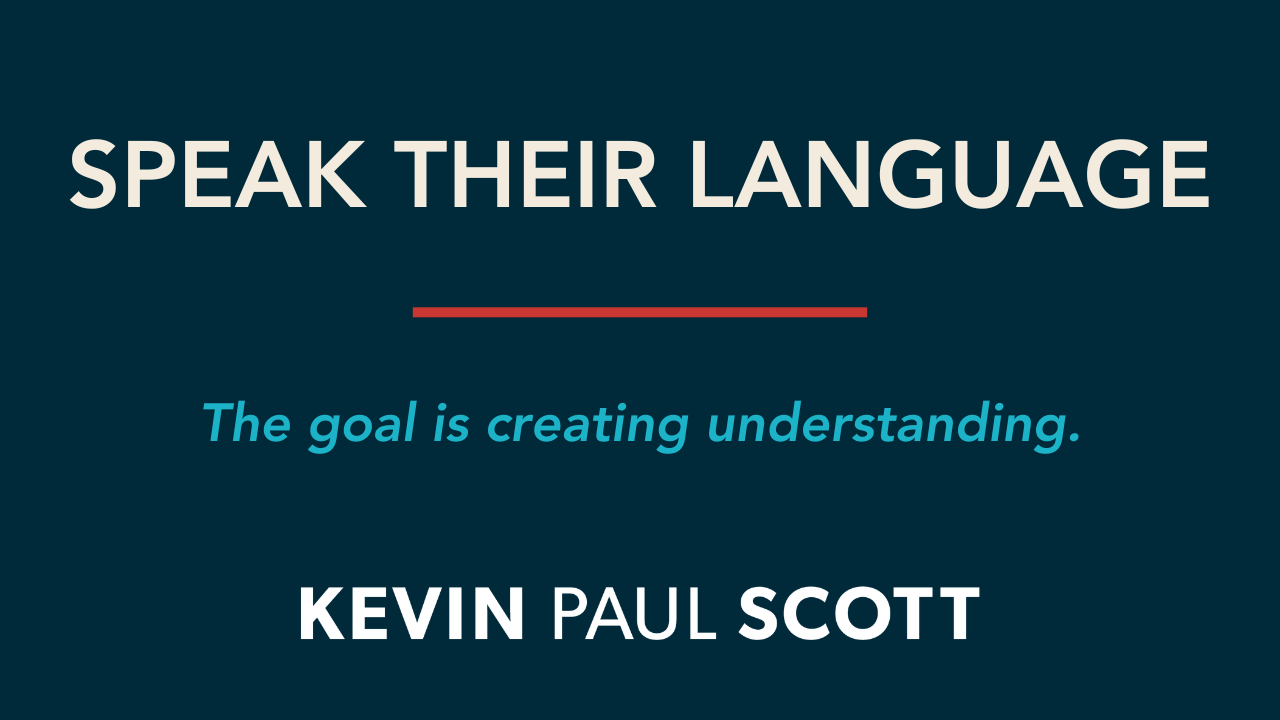
The goal is not simply transferring information. The goal is creating understanding.
When leaders communicate in the language of the learner, something important happens. Clarity increases, alignment grows, and people begin to move together.
Before your next meeting or message, take a moment and ask yourself one question: Am I speaking from my context, or from their understanding? Then do the work to translate.